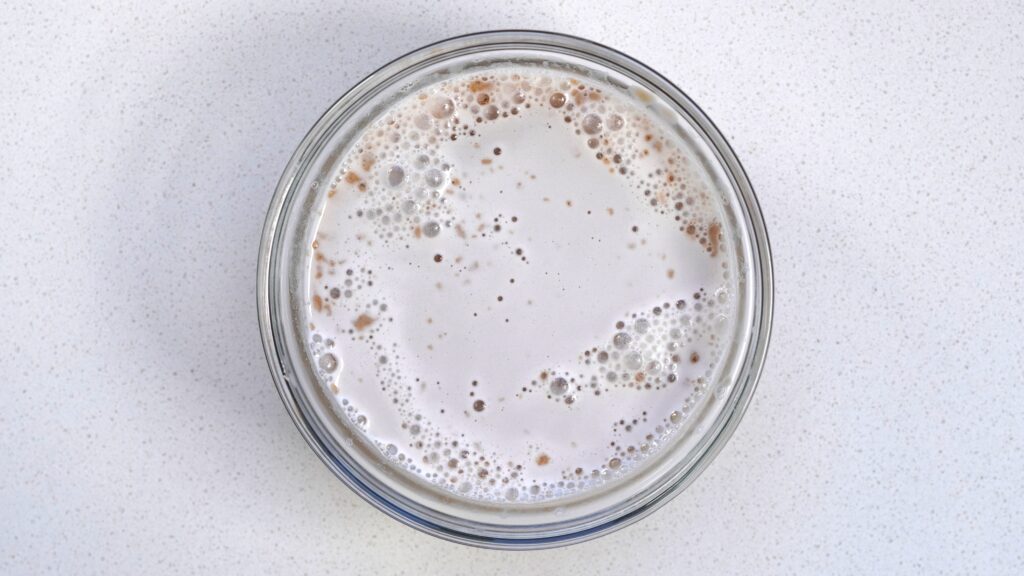
Add the dry yeast and half of the honey to a small bowl. Pour in the warm water, stir gently, and leave for 5 minutes until the surface becomes frothy.
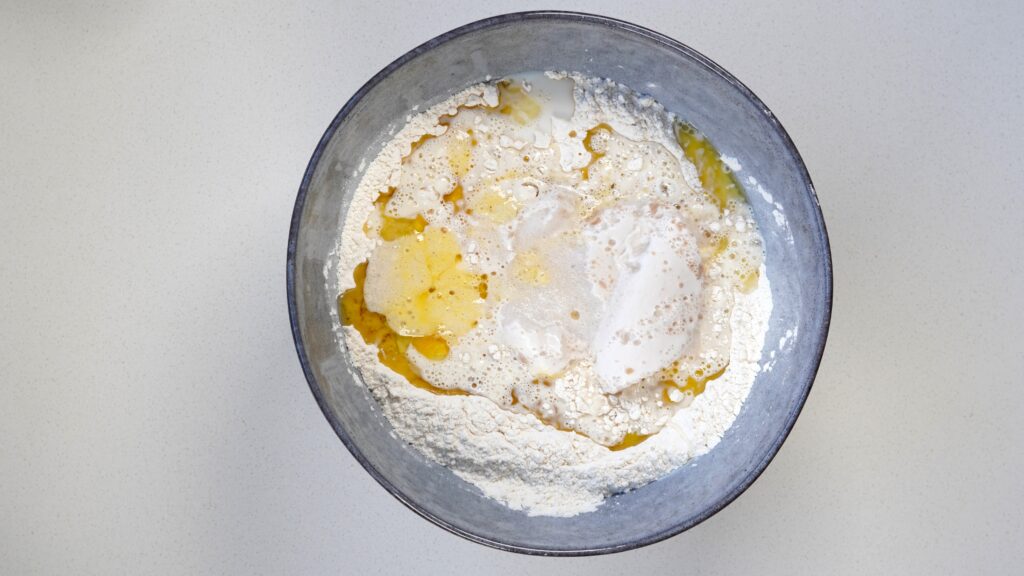
Make a well in the centre of the flour. Pour in the lukewarm milk, olive oil, salt, the remain honey and beaten eggs. Add the frothy yeast mixture, scraping in all the bubbles.
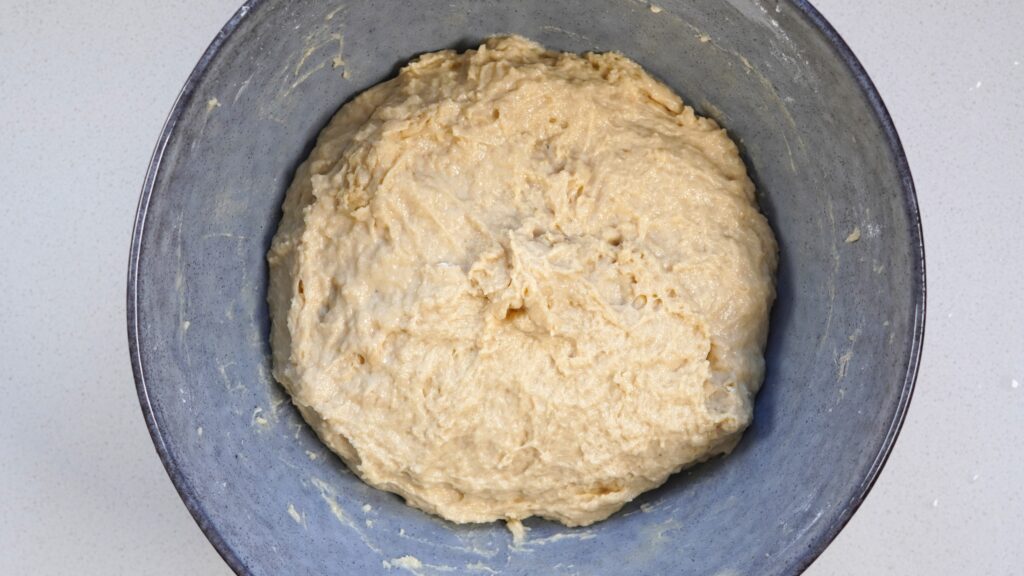
Mix everything together with a wooden spoon until it forms a thick, sticky dough. It should look like a heavy batter rather than traditional kneadable dough.
Cover the bowl with a damp, clean tea towel. Place in a warm spot to rise for 1½–2 hours, or until the dough has almost tripled in size. (Tip: Place the bowl inside your switched-off oven with just the oven light on for the perfect warm environment.)
Once the dough has risen, remove the tea towel and gently give it a quick mix to release the larger bubbles.
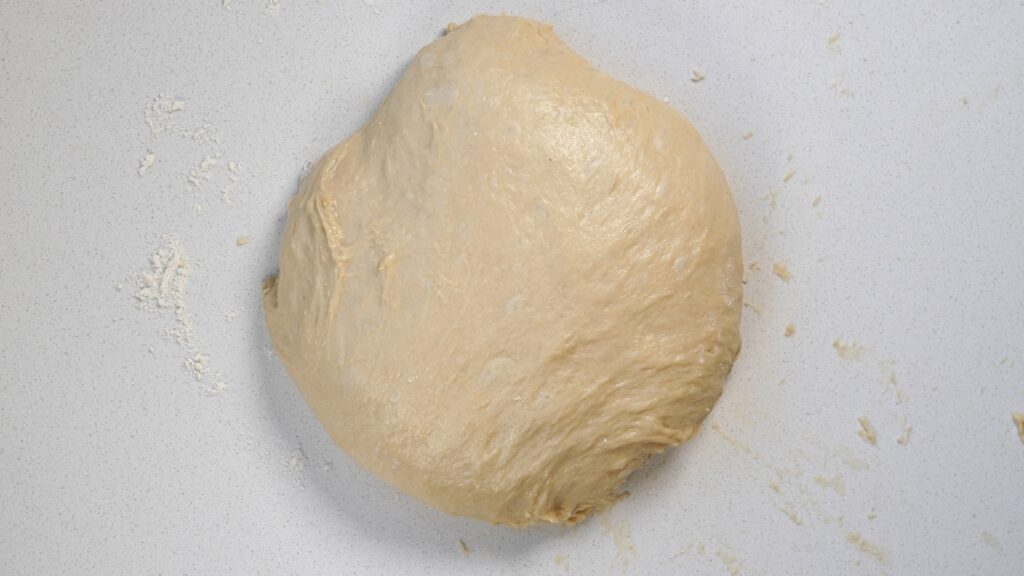
Lightly flour your work surface. Scrape the dough out and dust the top lightly with flour. Shape it gently into a log.
Cut the log into 4 equal pieces, then cut each of those pieces into 3 to make 12 pieces of dough.
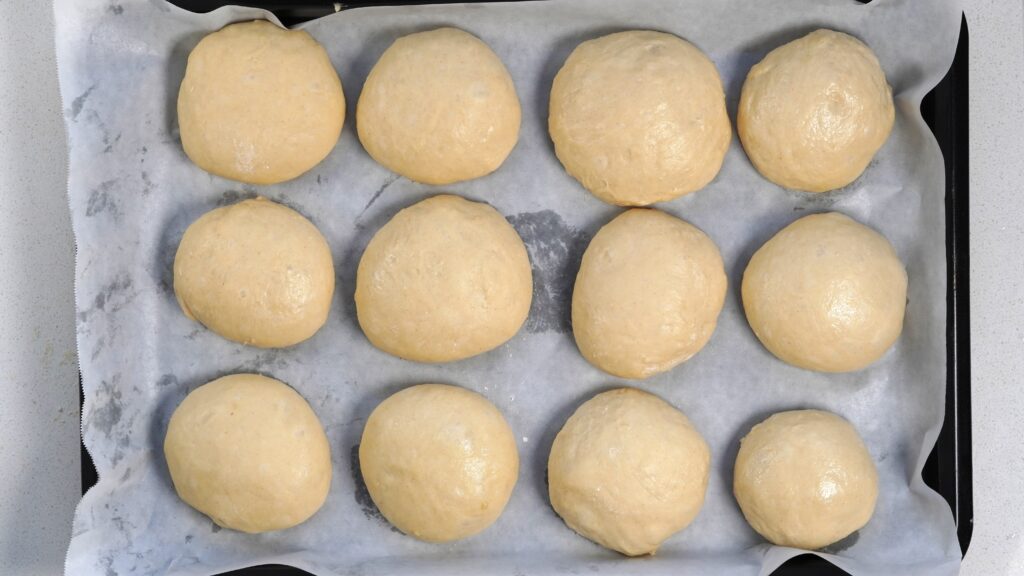
Rub a little olive oil onto your hands to stop the dough from sticking. Take one piece, press it gently to flatten slightly, then gather the edges into the centre to form a ball. Flip it smooth-side up and roll lightly to shape.
Place each dough ball, smooth side up, into a lined 38 × 25 cm (approximately 15 × 10 inches). baking tray. Arrange them in 3 rows of 4.
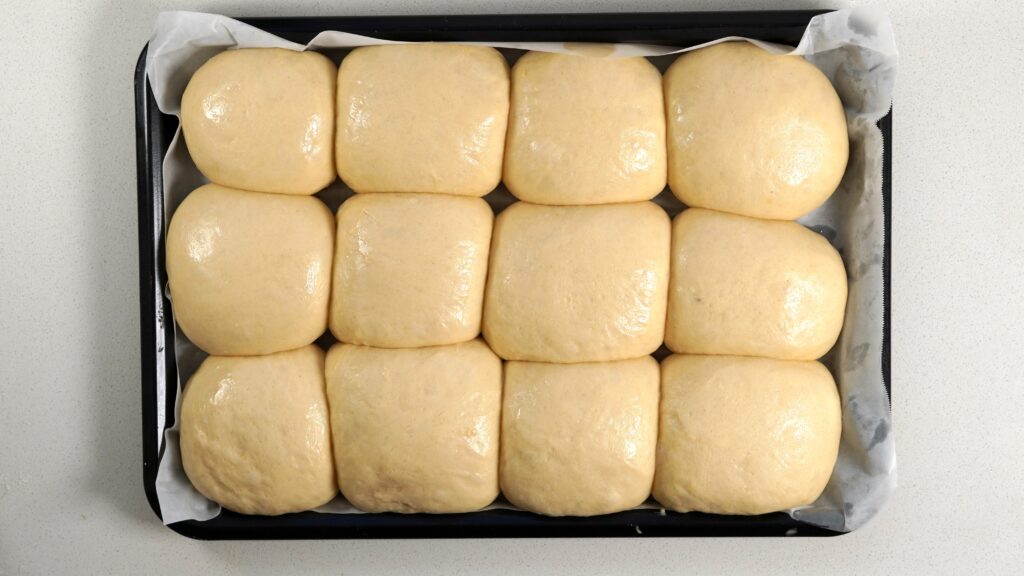
Cover the rolls with lightly oiled cling film so it doesn’t stick. Leave them to rise again for 30–45 minutes, or until they’re puffy and have risen by about 75%.
Preheat your oven to 180°C (350°F).
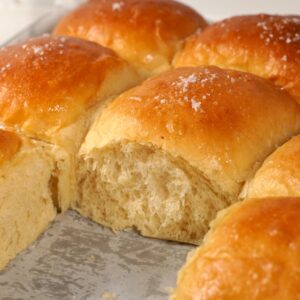
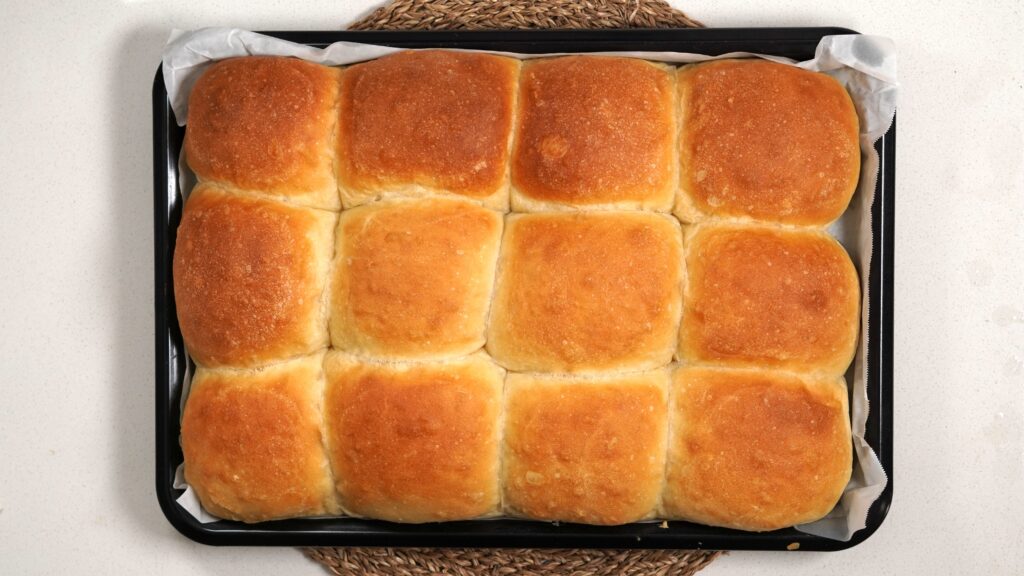
Bake the rolls for 20 minutes, or until the tops are a rich golden brown. A roll in the centre should sound hollow when tapped on the underside.
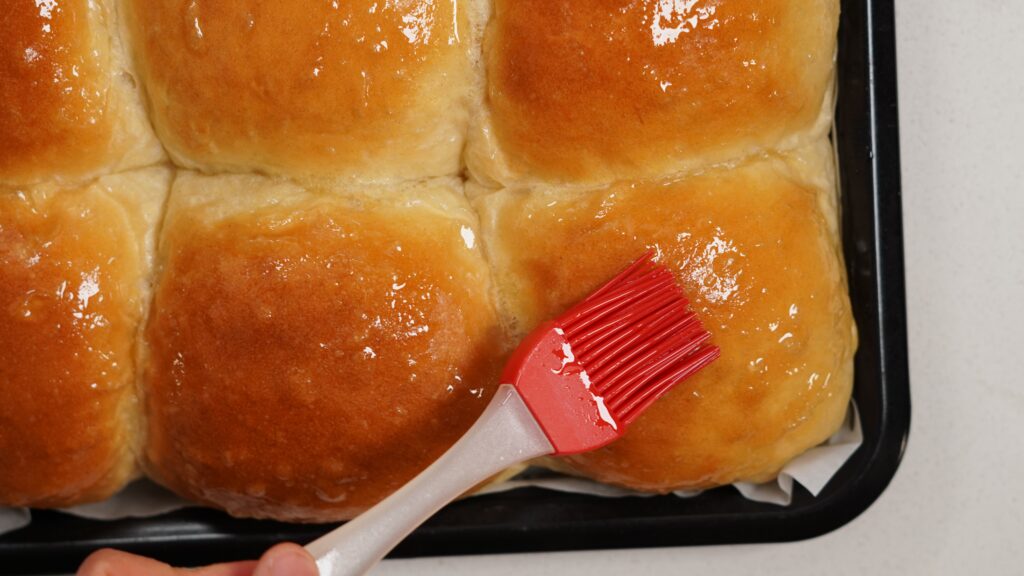
Remove from the oven and brush with olive oil if you want a soft, glossy finish.
Lift the rolls out using the baking paper overhang and leave to cool until warm before serving.